Kategorien
Bookkeeping

Conversion Cost : Meaning, Formula, Types and Importance

how to calculate conversion cost

In summary, overhead costs are how to calculate conversion cost the silent contributors to a company’s overall expenses. Understanding their nuances, allocating them accurately, and optimizing their impact are critical for sustainable business operations. Remember that while direct costs are visible, overhead costs quietly shape the financial health of an organization. Thus, each cost concept provides a somewhat different view of the costs incurred to create products, though both concepts include the cost of direct labor.

  • CPA (Cost Per Action) is used by businesses to identify the cost for each result.
  • To increase your conversion rate and grow your business, you need to add social proof notifications.
  • By understanding, managing, and optimizing these costs, organizations can enhance efficiency, maintain quality, and stay competitive in the market.
  • Calculating conversion cost is an essential part of understanding your company’s overall profitability and financial performance.
  • It allows us to provide our clients with real-time dashboards whilst saving our account managers many hours a month on client reports.
  • Suppose a textile factory employs 50 workers to weave fabric.
  • For example, if your total overhead is $100,000 and you have 10,000 machine hours, your overhead rate is $10 per machine hour.

Visitors leave your website without taking action?
how to calculate conversion cost

You can use different types of social proof, such as customer reviews, ratings, case studies, logos of trusted brands, media mentions, awards, certifications, etc. For example, you could say «Join over 10,000 satisfied customers who have improved their skills with our online courses», or «As seen on Forbes, CNN, and The Wall Street Journal». This way, you leverage the authority and the popularity of your offer to increase your conversions. Define your conversion goal and calculate your cost of conversion.
how to calculate conversion cost

Helpful Information about Conversion Costs

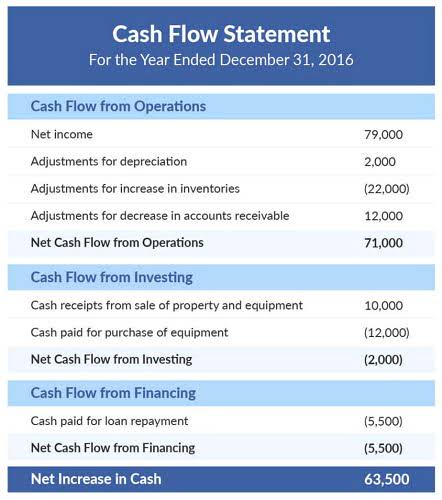
Conversion cost is a vital metric for manufacturing and production businesses. cash flow It includes direct labor costs and manufacturing overhead costs, which are necessary to transform raw materials into finished goods. By understanding and accurately calculating conversion costs, businesses can better manage their production expenses, set competitive prices, and improve overall financial performance.
how to calculate conversion cost

How to Reduce Your Conversion Cost?

how to calculate conversion cost

Use dayparting, demographic, and geographic targeting within the PPC campaign to zero in on segments of the audience more likely to convert, Outsource Invoicing thereby improving Cost Per Conversion. Improving Cost Per Conversion requires focusing on several factors influencing this critical KPI. Conversely, a low Cost Per Conversion alongside vital lead generation stats offers an opportune moment for taking advantage of a well-oiled marketing machine.

Augmented Product: Examples, Expert Advice, & Strategies

These notifications build trust and urgency, turning visitors into customers effortlessly. Social proof notifications are useful for e-commerce stores, websites, and landing pages to display pop-up notifications and encourage visitors to take similar actions. Highlight real-time activities like reviews, sales & sign-ups. These conversions are focused on engaging users with content, suitable for content-driven sites like blogs or educational platforms.
how to calculate conversion cost

Interpreting Conversion Costs

  • It’s the amount of the company’s cash flow that is available to pay the current debt obligations.
  • The cost of conversion can vary depending on your business model, industry, target market, product or service, and conversion funnel.
  • Remember, these costs are not just numbers; they represent the tangible building blocks of every product we encounter in our daily lives.
  • For costs of units completed and transferred, we take the equivalent units for units completed x cost per equivalent unit.
  • For example, you could say «Join over 10,000 satisfied customers who have improved their skills with our online courses», or «As seen on Forbes, CNN, and The Wall Street Journal».
  • For instance, if you notice a high CPC, it might be time to refine your targeting or ad creatives.

But how can negative keywords help you reduce your conversion cost? First of all, they prevent your ads from targeting unlikely leads. And your ads reach users who are most likely to become your customers. That’s why it is vital to keep a tab on metrics such as conversion cost.

Kategorien
Bookkeeping

Intangible Non-Current Assets: Accounting, Valuation, and Auditing Considerations

is an intangible asset a current asset

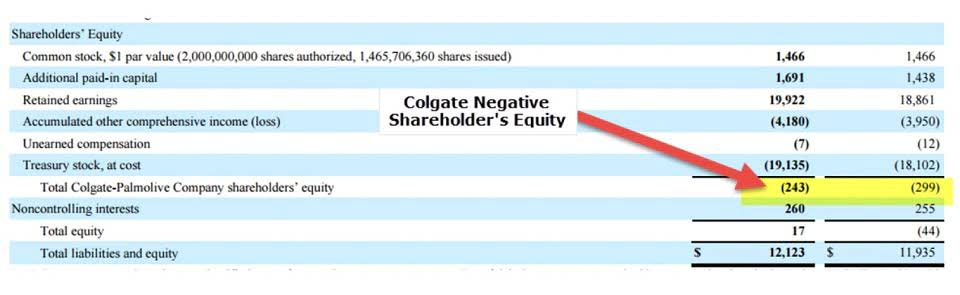
Long-term financial and operating leases are important examples of such cases. Previously, any source that had an expected economic benefit in the future could be recognized as an asset. Assets and liabilities are key components of a balance sheet for any company. However, these assets and liabilities must be recognized and reported according to the IFRS rules. https://www.empatikids.ro/what-is-qbo-in-accounting-best-quickbooks-online/ Each method serves a different purpose and is chosen based on the asset’s nature, market conditions, and reporting requirements. Combining these valuation methods helps create a comprehensive picture of a business’s asset value, supporting sound financial analysis and decision-making.

  • Intangible assets are recorded in the business’s balance sheet, and these assets are stated at cost less accumulated amortization and impairment.
  • Each method serves a different purpose and is chosen based on the asset’s nature, market conditions, and reporting requirements.
  • By knowing the difference between tangible and intangible fixed assets, you can do better financial planning.
  • At Vedantu, we make complex topics like intangible assets simple through easy tables, clear examples, and up-to-date accounting standards.
  • Under IFRS and GAAP, tangible assets are initially recorded at historical cost, which includes the purchase price and costs directly attributable to making the asset operational.
  • The method of amortization should be based upon the pattern in which the economic benefits are used up or consumed.

Current Assets

is an intangible asset a current asset

Under the revaluation model, the asset’s market value is obtained and compared with the carrying value. If the market value of an asset exceeds, it’s considered to be an increase in the fair value and added in the cost of an asset. Similarly, the credit side is recorded in the comprehensive income. Most importantly, the change addresses the expected economic benefits with the potential economic benefit. Under the current definition laid by the IASB, the source must only have the potential to produce an economic benefit. The company doesn’t have to wait until the economic benefit is realized.

Income Statement Under Absorption Costing? (All You Need to Know)

A company can classify assets in terms of current and non-current assets. The IAS 1 defines the basic structure and elements of the financial statement. Properly identifying assets enables businesses to maintain accurate financial records, which support strategic planning, resource allocation, and financial reporting. An intangible asset with a finite useful life is amortised and is subject to impairment testing.

is an intangible asset a current asset

Fixed Assets in Financial Statements

Deskera ERP seamlessly integrates asset management with inventory management, ensuring that any changes in asset status are automatically reflected in the overall inventory system. This integration helps maintain accurate financial and inventory records, reducing the risk of discrepancies. With Deskera, businesses can track the entire lifecycle of an asset—from acquisition to disposal. This feature ensures that is an intangible asset a current asset assets are properly maintained, and any impairments or write-offs are recorded accurately. By following these steps, businesses can get a clear picture of their total asset value, helping to inform financial strategies and maintain accurate accounting records. Understanding these asset types enables businesses to better assess their financial standing, optimize asset usage, and enhance decision-making regarding resource allocation and investment.

Types of Non-Current Assets

is an intangible asset a current asset

Large trading volumes ensure fast disposal of liquid assets without any significant loss of value. Short term loan refers to the loan given by the company toits employees or some other company for a short term period of less than oneyear. Short term loan is HOA Accounting shown as outstanding loan in the financial statementof the company.

  • In the balance sheet,assets are listed at historical cost and not at the market value.
  • From the above, the derive we can clearly come to the point  intangible fixed assets in balance sheet is the answer.
  • Non-current assets also affect leverage ratios, such as the debt-to-assets ratio, calculated by dividing total liabilities by total assets.
  • The distinction between current and noncurrent assets has to do with the liquidity of the asset  – meaning, how quickly can it turn into cash.
  • Financial accounting principles require you to record intangible assets in the balance sheet.

What are business assets?

  • Like tangible assets, they contribute to daily operations or give your business a competitive edge.
  • Read this article on intangible assets from The Economist for more information.
  • Long-term investments include financial assets a company intends to hold for extended periods, such as equity securities, debt instruments, and real estate.
  • Similarly, the return on assets (ROA), measuring profitability relative to total assets, is influenced by changes in non-current asset values.
  • An example of a journal entry is to record the acquisition of an intangible asset, such as a patent.
  • Businesses typically need many different types of these assets to meet their objectives.
  • Only those intangible assets are recorded which are acquired or bought by your business.

Intangible assets appear under non-current assets on a company’s balance sheet. Their valuation follows accounting standards such as AS 26 and IAS 38. Most identifiable intangibles are amortized over their useful life, while goodwill is tested annually for impairment. Correct presentation of intangible assets demonstrates an organization’s true financial strength.

  • Assets and liabilities are key components of a balance sheet for any company.
  • These assets are not intended for immediate sale or consumption, distinguishing them from current assets like cash and inventory.
  • For instance, a patent provides legal protection and competitive advantage for its entire legal life, which can span two decades.
  • Intangible assets can become a business deduction in the form of amortization expense, which affects your Profit and Loss statement.
  • Over time, these assets are depreciated, systematically allocating their cost over their useful life to reflect wear and tear or obsolescence.
  • For example, accounts receivable and prepaid expenses are nonphysical, yet classified as current assets rather than intangible assets.

This group includes land, buildings, machinery, furniture, tools, IT equipment (e.g., laptops), and certain wasting resources (e.g., timberland and minerals). They are written off against profits over their anticipated life by charging depreciation expenses (with exception of land assets). Accumulated depreciation is shown in the face of the balance sheet or in the notes. In financial accounting, an asset is any resource owned or controlled by a business or an economic entity. It is anything (tangible or intangible) that can be used to produce positive economic value.